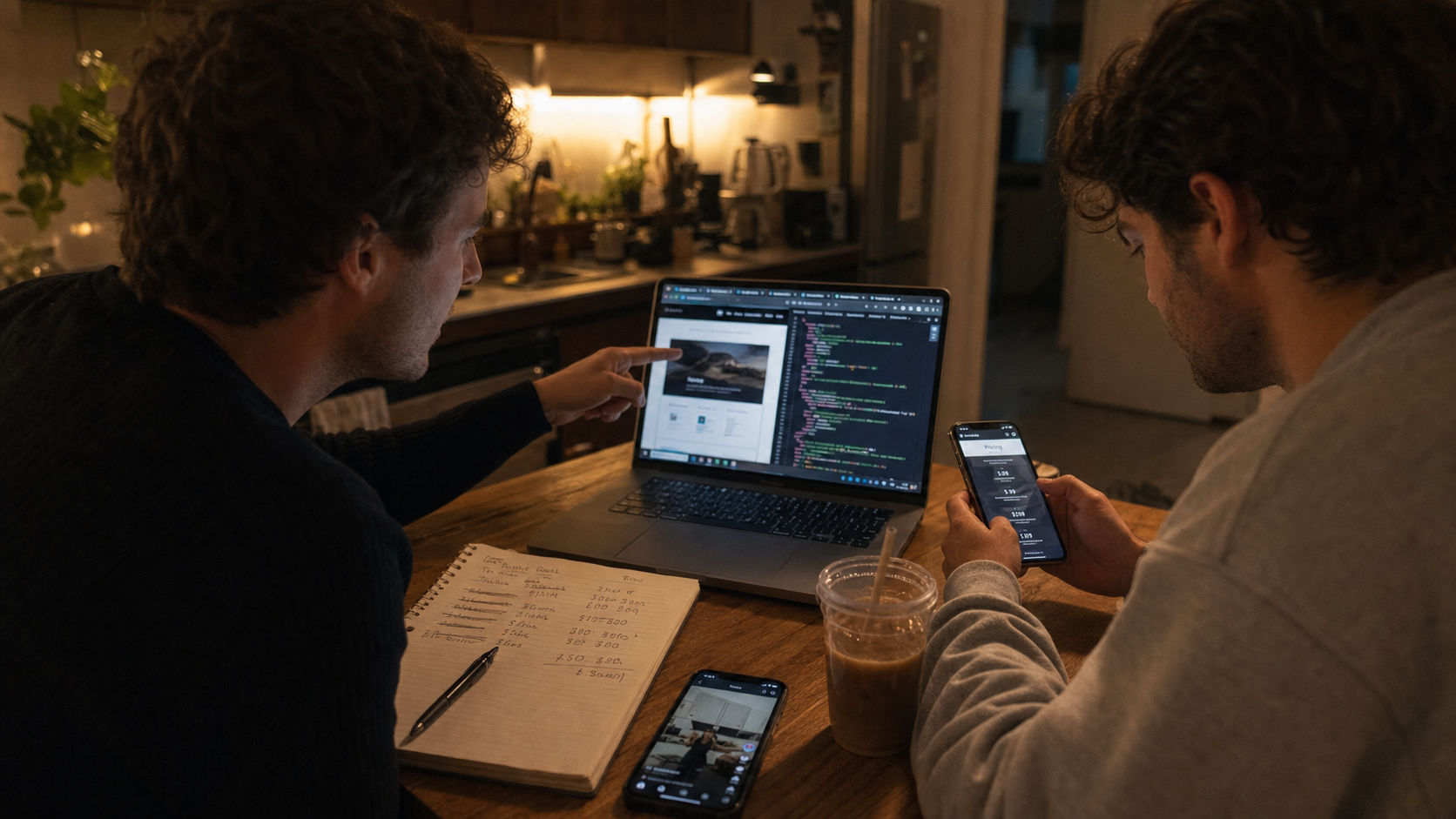
Why the 'I'll Build a Website and Start Making Money' Promise Doesn't Work as Advertised
John heard that building websites was easy money. Reality proved otherwise. Discover realistic freelance rates, the biggest hurdles, and why landing your first paying client is much harder than building your first site.
A common myth propagated on social media is that mastering a website builder or design tool immediately translates into effortless, high-paying client retainers. In reality, earning a living from web design requires a balanced combination of technical craft, consultative sales skills, and the ability to cultivate commercial trust. According to the nationwide Useme Freelancing Report, web design and development remain among the most lucrative freelance categories (with standard rates ranging from $400 to $2,000+ / 1,500 to 8,000 PLN net per business site). However, over 60% of novice freelancers exit the industry within their first six months due to inconsistent client acquisition and the lack of a standardized proposal process. Global research from the Upwork Freelance Forward report confirms that success in digital client services depends 50% on technical proficiency and 50% on transparent client communication and problem-solving capability. Below is an honest breakdown of market rates in 2026, operational costs, and proven strategies to land your first paid project without giving work away for free.
Where Does the Illusion of “Easy Money” in Web Design Come From?
Social media algorithms often amplify headline-grabbing success stories along the lines of: “I built a website in 2 days and invoiced $2,000.” What these posts conveniently omit are the preceding weeks of prospect outreach, client revisions, scope adjustments, and contract negotiations.
Algorithms That Reward Hype Over Nuance
Content that triggers excitement generates maximum viral reach. Viewers see the headline invoice amount, but miss the months spent learning project scoping, server management, client onboarding, and scope creep management.
The Clash Between Expectations and Commercial Realities
Aspiring creators frequently assume that learning a single visual page builder is enough. When faced with their first real-world sales conversation regarding invoicing, licensing terms, copyright transfer, and performance SLAs, the barrier to entry quickly becomes evident.
Why Breaking Into Web Design Proved More Complex Than Expected
When rolling up your sleeves on actual client deliverables, challenges arise that rarely appear in generic YouTube tutorials:
- Technical skills represent only 50% of the equation: WordPress, DNS records, SSL certificates, and API integrations are learnable skills, but they do not automatically generate incoming sales leads.
- Acquiring your very first paying client is the ultimate test: Prospective clients do not pay premium rates for demo templates or fictitious portfolio concepts.
- Communicating without technical jargon: Business owners rarely care about MySQL database normalization or CSS utility frameworks — they care about how many qualified inquiries their new site will generate.
How Much Can You Realistically Earn Building Websites in 2026?
Freelance market compensation scales directly with project complexity and commercial maturity:
| Experience Level | Typical Monthly Net Income | Scope of Deliverables |
|---|---|---|
| Beginner (0–1 years) | $1,000 – $2,000 / 4,000 – 7,500 PLN | 3–5 simple brochure websites ($400–$700 each) |
| Intermediate (2–4 years) | $2,000 – $3,500 / 7,500 – 14,000 PLN | CMS websites, blogs, on-page SEO, analytics |
| Senior / Specialist (5+ years) | $4,000 – $7,000+ / 15,000 – 25,000+ PLN | Custom web apps, e-commerce stores, SLA retainers |
A standalone brochure landing page typically costs between $400 and $900 (1,500–3,500 PLN), a comprehensive multi-page corporate website $900 to $2,000 (3,500–8,000 PLN), and a dedicated custom online store between $1,500 and $6,000+ (6,000–25,000 PLN).
Why Finding Your First Client Is Harder Than Writing Code
Mastering a modern no-code platform or AI-assisted development workflow takes anywhere from a few days to a few weeks. Winning client trust without a track record of live case studies requires a completely different approach:
Where to Source Your Initial Commercial Projects
- Your local community and professional network: Start by auditing websites of local businesses in your immediate area (barbershops, auto repair garages, physiotherapy clinics) and offering an updated, mobile-responsive rebuild.
- Direct in-person or phone conversations: Personal outreach builds genuine rapport and credibility far faster than impersonal mass email templates.
Why You Should Never Work Entirely for Free
Working for $0 anchors your reputation as a free favor provider rather than a serious commercial partner. Instead, offer a structured 50% discount in exchange for a written reference, a video review, and permission to document the project as an in-depth case study.
Which Core Competencies Secure High-Paying Client Projects?
To turn technical skills into a sustainable, profitable freelancing career, focus on these three pillars:
- One well-honed tech stack: Master one primary environment completely (e.g., Astro + Headless CMS or modern WordPress) rather than maintaining surface-level familiarity with ten different tools.
- Transparent pricing and formal agreements: Always establish exact project scope, revision round limits, and payment milestone schedules in writing prior to starting work.
- Value-driven communication: Demonstrate clearly how rapid page speeds, accessible UX, and mobile optimization directly translate into customer inquiries and revenue for your client.
What Supplementary Revenue Streams Pair Best with Web Design?
Experienced freelancers rarely depend exclusively on one-off project invoices. To create revenue stability, introduce recurring retainer services:
- Ongoing Maintenance and Managed Hosting (SLA): $40–$150/month (150–500 PLN) for regular automated backups, security patching, and minor content updates.
- Technical On-Page SEO Audits: Core Web Vitals performance tuning and structured metadata configuration offered as a premium add-on.
- Selling Custom UI Templates & Components: Passive revenue from publishing specialized layout kits for fellow creators and agencies.
What Is the Most Important Takeaway for Aspiring Web Creators?
Earning a living from web design is a reliable, high-potential commercial craft, not an overnight shortcut. Creators who recognize that long-term success demands consistency, professional reliability, and clear client communication build resilient, profitable businesses for years to come.